
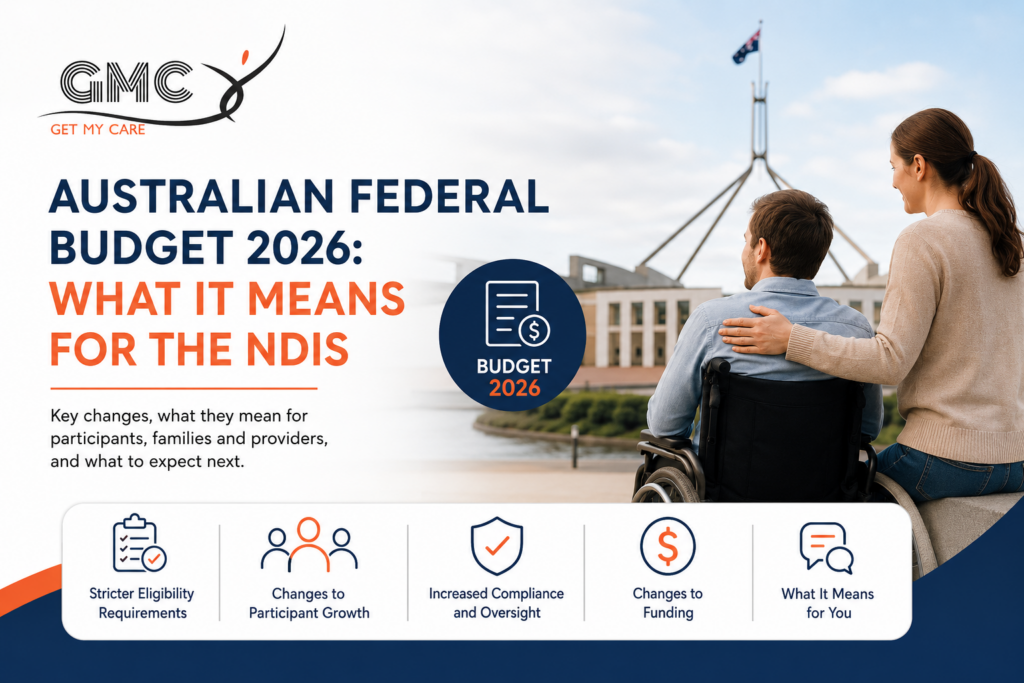
The 2026 Australian Federal Budget has introduced some of the most significant changes to the National Disability Insurance Scheme (NDIS) since the scheme began. For participants, families, carers, and disability support providers, the latest reforms are expected to reshape how support is funded, accessed, and delivered over the coming years.
At Get My Care, we understand that navigating NDIS changes can feel overwhelming. This article breaks down the key announcements from the Budget and explains what they may mean for Australians relying on disability support services.
Why the Government Is Reforming the NDIS
The Federal Government says the reforms are aimed at making the NDIS “sustainable for future generations.” According to budget papers, NDIS spending was projected to continue growing rapidly, prompting the government to introduce measures designed to slow growth and reduce long-term costs.
The 2026 Budget includes projected NDIS savings of approximately $37.8 billion over four years, making it one of the largest savings measures in the entire budget.
While the government maintains that the NDIS will continue to grow every year, the reforms are expected to tighten eligibility rules, change assessment processes, and increase oversight of providers and funding.
Key NDIS Changes Announced in the Federal Budget
1. Stricter Eligibility Requirements
One of the biggest changes is the introduction of stricter eligibility and “permanence” tests for accessing the NDIS.
Under proposed reforms, Australians may need to demonstrate that they have exhausted “all appropriate treatment options” before qualifying for support. Existing participants may also face reassessments under new rules.
The government is also moving toward standardised assessments instead of relying primarily on medical diagnoses.
For many participants and families, this raises concerns about:
- Longer approval times
- Increased administrative processes
- Potential loss of eligibility
- Reduced access to supports for people with complex or evolving conditions
Disability advocacy groups have warned that some Australians could fall through the cracks if replacement support systems are not fully operational before NDIS access becomes more restricted.
2. Reduction in Participant Growth
Budget forecasts suggest the government intends to reduce the projected number of NDIS participants from around 760,000–900,000 people down to approximately 600,000 participants by the end of the decade.
This does not necessarily mean current participants will immediately lose support, but it signals a major shift in how access to the scheme will operate in the future.
For Australians seeking access to the NDIS for the first time, eligibility requirements are expected to become more rigorous.
3. Increased Compliance and Fraud Prevention
The government has allocated hundreds of millions of dollars toward combating fraud and improving oversight across the NDIS.
Measures include:
- New digital payment systems
- Increased provider regulation
- Mandatory registration for high-risk providers
- Enhanced auditing and compliance activity
- Greater oversight of support coordinators and plan managers
While stronger safeguards may improve accountability and participant protection, providers may also face increased administrative obligations and compliance costs.
4. Changes to Participant Funding
Another controversial proposal would allow funding reductions across certain support categories without reassessing every participant individually.
This means some budgets — such as community participation supports — could potentially be reduced at future plan reviews as part of broader policy changes.
The government says any reductions must still consider participant safety and wellbeing, but disability advocates fear some participants could lose essential supports that help them maintain independence and community connection.
What This Means for NDIS Participants
For participants and families, the reforms may create uncertainty over future funding, eligibility, and support planning.
Areas likely to be impacted include:
- Plan reassessments
- Access to therapies and supports
- Community participation funding
- Early intervention pathways
- Access for children entering the scheme
At the same time, the government has announced investments into “Foundational Supports” and the new “Thriving Kids” program, which aim to provide community-based assistance outside the NDIS framework.
However, many disability organisations argue these systems are not yet fully designed or funded sufficiently to replace existing NDIS supports.
What This Means for Disability Support Providers
For disability support providers, the budget signals a major transition period.
Providers may need to prepare for:
- Tighter compliance requirements
- More regulated pricing structures
- Increased scrutiny from regulators
- Changes in participant funding levels
- Greater competition among registered providers
Many providers are also concerned about how reduced participant budgets could affect service demand and financial sustainability.
At the same time, providers who focus on quality care, transparency, compliance, and participant outcomes may be better positioned as the sector becomes more regulated.
The Importance of Staying Informed
The NDIS continues to evolve, and many of the announced reforms will still need to pass through consultation, legislation, and implementation phases over the coming months and years.
For participants, carers, and providers, staying informed and proactive will be essential.
At Get My Care, we remain committed to helping Australians navigate the changing disability support landscape with confidence, compassion, and clarity.
As further details emerge, we encourage participants and families to:
- Review their current plans carefully
- Keep records and supporting documentation updated
- Speak with trusted support coordinators and providers
- Stay informed about upcoming policy changes
The 2026 Federal Budget marks a turning point for the NDIS. While the government says the reforms are designed to protect the scheme’s long-term future, many Australians within the disability community will be watching closely to see how these changes affect real people and everyday support services.
Resources:
For help understanding your plan and how the 2026 Budget affects you as a participant, Call Get My Care on 1300 600 200